Diaries of The Breadman’s Daughter: 12 Ways to Bring Heart and Meaning to Your Work.

DSCN1378dI’m a lucky woman. I was born and raised in a small town in Northwestern Ontario at a time when career options were somewhat limited for women. Or more specifically, my vision for what I could be when I grew up was myopic. Salesgirl. Secretary. Teacher. Nurse. Wife. Mother. It was a time of women’s liberation and world transformation but we lagged behind in our town of early snows and sweltering summers. From that list, I chose Teacher, Secondary Level, with specialization in English and History. An honorable profession, but not for me, at least not back then.

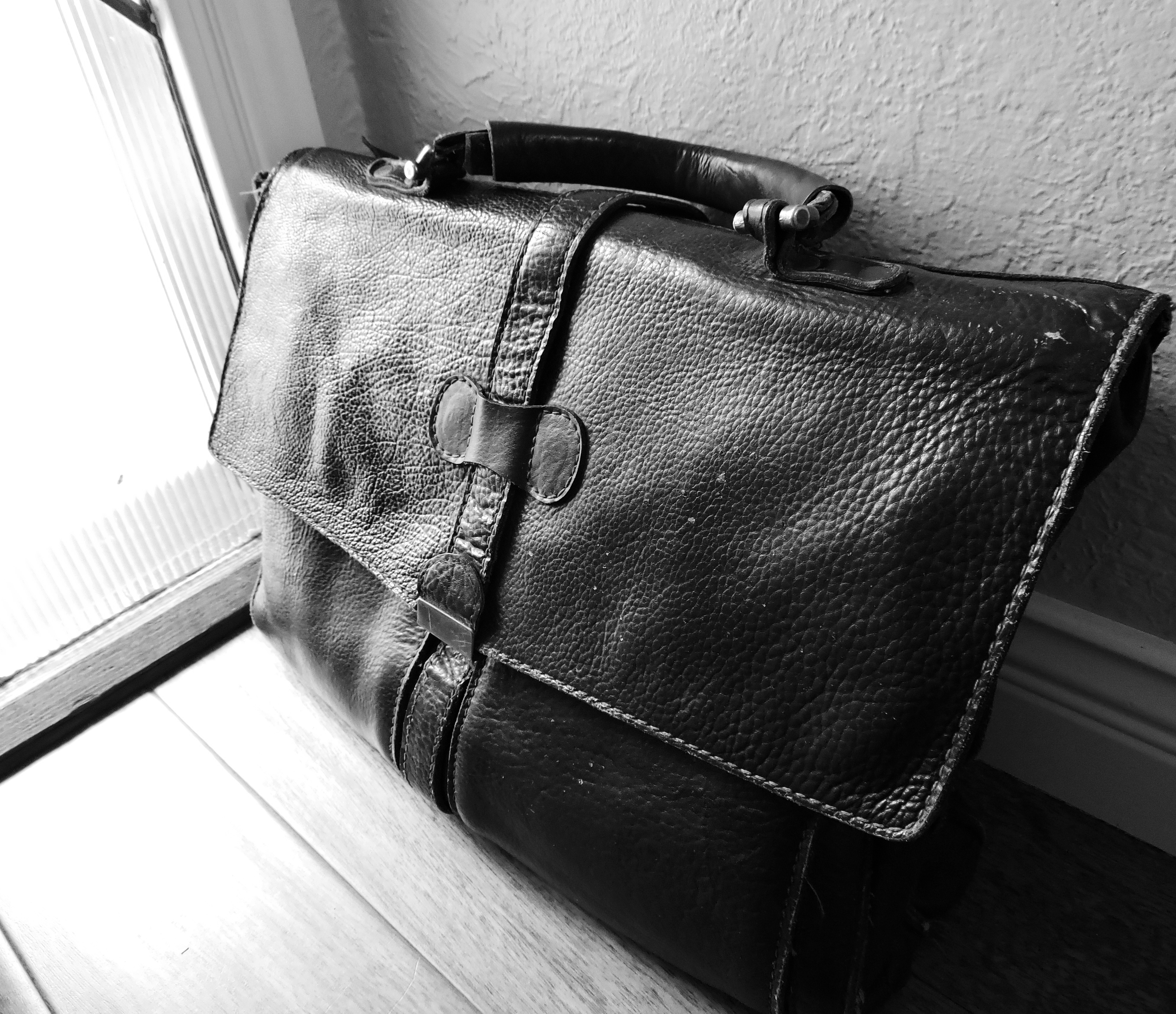
Secretly, I had bigger dreams than the classroom could contain. Write novels. Tell stories. Spend my days in the presence of creative, imaginative and artistic folks. And oddly enough, to carry a satchel-style briefcase made of brown leather to work every day.

Through a series of fortunate events, that spanned the better part of a decade, I landed a job as a Junior Copywriter in a mid-sized boutique agency in Toronto. Thus began a career I never dreamed of but as it turns out was tailor-made for me.

Fast forward two decades to the West Coast to a small boutique agency nestled in the countryside where fields of green are dotted with sheep, horses, chickens and goats. It is here that I have found my place amongst some of the most talented and creative minds in Canada. It is here that I bring my heart for service, my teacher’s sensibility and a mother’s compassion and love.

I am a Production Manager.

I have had tons of on-the-job training and learning over the years. But so much of what I do professionally, and the way I work, my modus operandi, comes from my personal life and core values. There are so many, I could write a book, but here are a dozen things I’d like to share with you, in no particular order.

  1. Be kind and compassionate. Treat people the way you would like to be treated. The old adage is true. Imagine yourself in their shoes. Walk a mile in their moccasins or mukluks or Manolos. Seek understanding. Express genuine concern. Cultivate a magnanimous spirit.
  2. Treat everyone the same, from the courier to the CEO. Everyone is important and has value. Everyone has a meaningful role to play in your business. Be respectful and appreciative of what each person brings to the table, regardless of their title or station in life.
  3. See the good in everyone. It’s there. Truth is, you may have to dig deep to see it in some. While others it sits on the surface like a shiny penny. You have the power to bring out the best in everyone. But first you have to see it.
  4. Be generous with your praise. If someone says or does something you think is terrific or wonderful, remarkable or just plain nice, acknowledge it. Don’t be stingy in this area. Don’t withhold. Let your colleagues, associates and suppliers know how much you appreciate them and the work they do. Take pleasure in the accomplishments of others.
  5. Think of different ways to do things. Be innovative and creative in your approach to everything. This will add freshness to your daily routine. Be a Curious George. Say, “yes” to new opportunities and challenges, even if they scare you. Zig when everyone else is zagging.
  6. Have impeccable manners. There is no excuse for rudeness. Anywhere. Anytime. Treat everyone respectfully and politely. Please and thank you go a long way.
  7. Fear not and take risk. Fear kills creativity and it’s paralyzing. It’s that simple. Kick it to the curb every time it enters your heart, mind or spirit. Go out on a limb and extend yourself beyond your comfort zone. Don’t listen to the naysayers or the negative noise around you. Listen to the small quiet voice within that cheers you on and propels you to greater accomplishments. And if fear or insecurity does creep in, work with the confidence, faith and belief that others have in you. Remember why you were hired in the first place.
  8. Be of service and helpful. Look for all the ways you can make someone else’s job easier and more meaningful. Lighten their load. Lift their spirits. Be someone who can be counted on, trusted, relied upon, and the wind beneath the wings. The supporting actors always have the most interesting parts. Remember that.
  9. Be smart not a smart aleck. Be humble and gracious. Let your talent and brilliance speak for itself. It isn’t necessary to flaunt your credentials. There’s no need to show off or grandstand. Park your ego and let others shine. When you do, it’s remarkable how smart and wise your colleagues will find you.
  10. Extend grace in order to receive grace. We all make mistakes, for we are only human after all. First and foremost, be forgiving when someone makes a mistake, especially on your watch. Accept that things often go awry. Turn out wrong with disappointing results. Understand that unfortunate things happen, even with the best intentions, the best efforts, the best people on the project. Resist the urge to point fingers, assign blame or throw someone under the bus. Trust me, in situations like this, the people involved feel badly enough. Scolding an adult like you would a five-year old child is demoralizing and doesn’t accomplish anything. Nor does it move the conversation in the direction it needs to go.
  11. Recover quickly from mistakes. It’s not the end of the world. You’ll survive. This too shall pass. But first, own it and then move swiftly to repair things. And know this, in the end it’s not the mistake that anyone remembers but how it was dealt with. A bad resolution leaves a bitter taste that lingers in the air. Gather all your resources to help you to fix things. Remember, you are not alone. Most things that go wrong involve several people, all of whom could have prevented it from happening at some point along the process. So rally your troops. Fix it, extend your sincere apologies, learn from the experience, stop beating yourself up. And move on.
  12. Go for a walk at lunch. Take a break. Get out of the office or studio or plant or store, or wherever you spend your day. Leave. I go for a walk every day because that’s what I like to do. I love being outdoors, regardless of the weather or time of year. Walking changes my perspective and opens the window to more mindful ways of working. Helps me to see things differently, more clearly. Unclogs my brain, and possibly my arteries. It eases the stress, fosters problem solving, inspiration and new ideas. I often take an idea for a walk to see if it “has legs” or needs to be tossed. After twenty minutes on the road, I usually know. If walking isn’t your thing, then find something that is. But most importantly, remove yourself from the building. Make this a daily habit. It’s one of the healthiest and most productive things you can do in your day. It’s one of the keys to long-lasting and enduring success.
Diaries of The Breadman’s Daughter: Waiting Rooms.

Some days I feel dark.I have become intimate with waiting rooms over the past few months.  But none have gotten under my skin so deeply as the one at the Cancer Agency where E had the PET scan.

It was a small crowded room packed with patients waiting to be tested and their respective support groups.  And me, the consummate Groupie.  We got there early so there was ample time for E to fill out the intake form and for me to get restless and bored.  The chairs were stiff and awkwardly close.  The lights were unbearably bright.  Mocking and cruel. The air was weary. This was not a place to linger nor languish.  Here, you waited, got it over with and then got the hell out.

We waited.  And waited.  Waited some more.  At one point, I fell asleep and may have snored, ever so slightly.  E gave me a little love nudge.  I bolted upright and looked around, momentarily confused by my surroundings.  Oh yes, we’re still here I thought.

E’s name was called precisely at the appointed hour.  I gave him a quick peck on the lips, squeezed his hand and watched as he followed the nurse through the heavy metal double doors.  What lay beyond was all a big mystery to me.  I wanted to keep it that way.  Others had gone before him and they all came back okay.  So would he.

I settled in for the 2-hour wait.

I managed to read a few pages from The Color of Water before succumbing to the call of slumber.  My eyelids fluttered and slowly closed.  My head sagged heavily onto my chest like a two hundred pound pumpkin.  Not a pretty sight.  In the end, it was the drool trickling from the corner of my mouth that brought me back to wakefulness.  I wiped my chin with the back of my gloved hand, closed the book and slipped it into the side pocket of my purse.

Then I did what I do best.  Observe.  Witness.  Listen.

There was a painfully thin older woman in her seventies surrounded by her family, who were helping her fill out the daunting intake form.  Her son patiently went through the form question by question. Sometimes answering for her.  And like E and I, sometimes guessing at questions with possible multiple answers or ones that simply didn’t make sense. Close enough was good enough.

There was the young man waiting for his beautiful wife.  She was one who had gone through the double doors before E. When she emerged, he jumped up and was immediately at her side.  “Ah, my beautiful wife,” he declared as he kissed her cheek and took her hand. They sat in the hallway together for a moment, holding hands.  Then he returned to the admitting desk with questions about the “reports to the doctor.”  “Would they get copies as well?” he asked.  Once assured that all was in order, they left. He, with his arm around her waist, and she, with her head snuggled into the sweet spot in his neck.  It took my breath away.

There was the athletic looking woman with the grey hair and backpack slung over here shoulder.  She stood next to the wall with her equally fit friend and made arrangements to meet up afterwards.  There was the heavyset woman who sat quietly knitting.  The middle-aged man in the leather bomber jacket and faded jeans reading the paper.  The teenage boy with the headphones and rapper-style hip-hop jeans, who paced the hallway in step to the music he was listening to.  The young happy bubbly girl barely into her teens, who greeted her anxious parents with a big smile and a reassuring, “It wasn’t that bad.”

And there were others too who came and went during my wait that dreary afternoon in the middle of February.  All there for the same reason.

As I write this, my eyes well with tears at the memory.

The Big C is an equal opportunity invader.  It strikes randomly and carelessly.  Unapologetic and audaciously so.  Old women confused by the questions on forms.  Girlfriends with backpacks and sensible walking shoes.  Beautiful young wives with handsome thoughtful husbands.  People killing time by reading newspapers and books.  Knitters of scarves and baby blankets.  Middle-aged men in denim and leather.  Young teenagers, whose walk on this earth too new to leave footprints.  And yes, even bluegrass musicians who play the upright bass with passion and heart.

The rich.  The poor.  And everything in between.  The happy and optimistic.  The pessimist and naysayer.  The sad and lonely.  The newborn and the ancient one.  There are no precise demographics. No one can pinpoint the target audience.  By touching us all in some way, the whole thing seems so common. Perhaps that’s the divine irony.  There are no favorites here.

The thing that struck me the most while I was waiting.  Hit me in the gut so deeply and profoundly. It was what all these people had in common that I did not possess.

Bravery.

Take that Big C and shove it where the sun don’t shine.

Diaries of The Breadman’s Daughter: You Could Die Waiting.

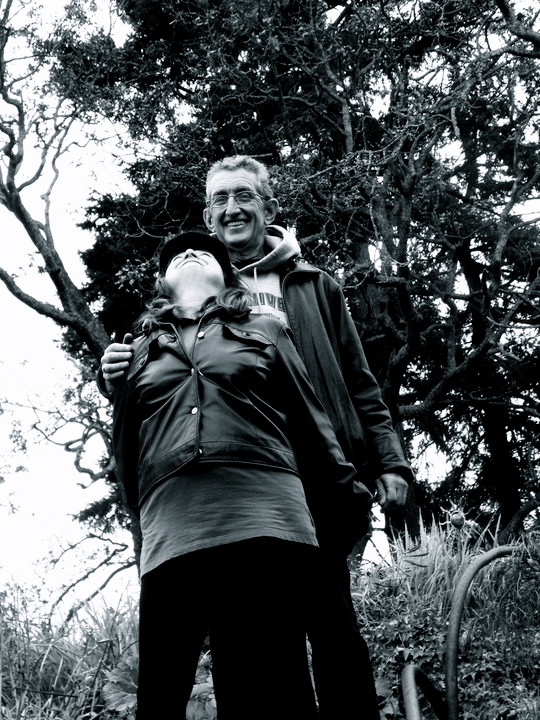
Boo looking up at E at the top of the garden.

Boo looking up at E at the top of the garden.

I have a big patience muscle.  I haven’t always.  But the older I get the bigger it grows.  It was tested fully those tedious grey hours that we sat waiting for a doctor in the ER. Each minute that passed felt like an hour.  I became the irritating kid on a road trip asking, “Are we there yet?”  Only my question that night was, “Is he here yet?”

M pulled out her Anthropology textbook and passed the time reading, listening to music and texting her best friend A.  Teenagers bring their cellphones to bed with them so they are there for each other 24 / 7. This wasn’t unusual. It’s a fascinating cultural phenomenon that is completely foreign to me, being that I’m as old as dirt after all.  I don’t judge.  It works for them.  I on the other hand, frustrate my daughter by my reckless lack of interest in my iPhone.  I use it primarily to take photographs, videos and record sounds.  I am also an Instagram addict.  But mostly the thing is either tethered to my iMac or lost in the bottom of my purse under wads of used Kleenex and other female essentials and paraphernalia.

During those wee hours of December 6, I amused myself by watching the monitor behind E.  It was hypnotic.  And almost as compelling as watching C-SPAN.  The endless minutes ticked by.  I spotted a miniature box of Kleenex on a shelf beneath the monitor and handed it to E to wipe his mouth.  He had the small bowl the nurse had given him resting on his chest to collect the steady flow of drool.  It’s funny the things that capture your imagination at times like these.  The bowl appeared to be made of the same material as take-out holders for drinks at fast food joints.  I wondered if it was sturdy enough to hold all that liquid pouring from E’s mouth. Would it turn to mush and melt all over him?  That’s all we needed on a night such as this.

Fatigue and weariness became intimate bedfellows, wreaking havoc with my emotions, which were fragile at best.  My body felt burdensome and heavy.  At one point I laid my head on the edge of E’s cot and closed my eyes.  I prayed for just five minutes of sleep. Just five lousy minutes.  Oh God, let me escape.  Get away from this insidious nightmare that held us captive.

With sleep turning it’s back on me like a jilted lover, I got up and tiptoed over to the nurse’s station.

“Do you think the doctor will be here soon?” I asked politely.

“Give it fifteen more minutes,” Nurse One replied patiently.

“My daughter has an exam in the morning and I have to work,” I said.  Not that it really mattered.  I just felt compelled to say this out loud.

“It shouldn’t be too much longer,” she assured.

“Okay,” I said, as I slunk quietly back to my chair next to E.

I was overcome by the 3Ds.  Defeated. Deflated. Depressed.

Then just like Nurse One promised, fifteen minutes later a lanky older man appeared suddenly out of no where.  The doctor had arrived. Hallelujah.

One of the other nurses emerged from behind their station to consult with him.  We were less than ten feet away so we could hear everything.  She gave him a quick rundown on the patients waiting for his attention.  There was the old lady in the wheel chair, the drunk guy sleeping on the gurney, and there was mouth guy.  Everyone was identified by their condition.  It was fast and efficient.

The doctor attended to E first.  Perhaps because he was one of the few who were conscious at that moment, or maybe my earlier query on when the doctor would arrive made me a squeaky wheel, or perhaps it was just our proximity to the nurse’s station.  It didn’t matter to me why E was the first to be treated.  I was simply grateful.

I filled the doctor in on the events that had transpired in the previous twelve hours — from the secret biopsy in the afternoon to the episode in the bathroom earlier that night.  A blow by blow account of E’s symptoms.  E interjected with the odd garbled comment.  No one really knew what he was saying.  The doctor scolded him for keeping secrets this big.

Then he asked E to open his mouth.

I peered over the doctor’s shoulder and got my first glimpse of what was causing all the grief.  E’s tongue was the size of a two-year old’s fist.

“Whoa,” I blurted. “Holy crap.”

The doctor sat down in my chair and crossed his long legs in a relaxed easy manner.  I stood across from him with M by my side.  We hung on his every word like he was our lifeline to hope and salvation.  He’d prescribe pain killers and call the surgeon who conducted the biopsy.  He teasingly proposed that M and I go home and get some rest.  E was in good hands and would be able to sleep once the medication kicked in.

Truthfully, M and I were relieved to be sent home.  The doctor was right.  E was in good hands.  There was nothing more for us to do that night.

M drove the truck home while I sunk into the passenger seat, thankful to be driven.  The rain had stopped but the streets were slick and wet.  We discussed the events of the evening. We were both a little shell-shocked.  M had been quiet and said very little during our vigil in the ER.  But in the shelter of our Ford Ranger she was able to share some of her feelings with me.

“I didn’t appreciate the nurse referring to Dad as mouth guy,” she said.

“I know,” I said.

“They shouldn’t talk like that in front of people’s families,” she said.

I understood my daughter’s hurt feelings.  But I also understood that this was just the everyday language of the ER. The nurse’s comments were not intended to cause harm. In fact, just the opposite was true.  They were merely the parlance of dispatching critical information with as much speed and economy as possible.

But I was too tired for explanations.  And she was too tired to care.

Silence filled the truck.  M and I were consumed with our own private thoughts.  As we were floating across town in a semi-dream state, I remember this horrible feeling of dread pass through my body.  Like thick black tar.  I flashed back to a year earlier.  To the week in September when our sweet little Jack Russell, Andy suffered a heart attack and died with me by his side.  E was in Nova Scotia burying his father, while M and I were thousands of miles away on the West coast.

It was just the two of us that week. Taking care of Andy. Watching him slip away. Overwhelmed by sadness. Paralyzed by grief.

This felt just like that.

Diaries of The Breadman’s Daughter: The Demon in the Dark.

The Bass Man and Boo in our garden.

The Bass Man and Boo in our garden.

On Thursday, December 6 at 1:00am my world was rocked.  Not by my teenage daughter playing her music too loud.  Nor by the sound of a car stereo blasting its way past our quiet house.  No, this was far more sinister.  And threatening.

I woke up to the disturbing sight of E in the hallway holding his head in his hands like a pumpkin leftover from Halloween.  He must have switched on the light because I could see him so vividly heading towards our darkened bedroom. Like a zombie, one of the characters from The Walking Dead. He was stumbling and mumbling.  I had been sleeping and had no idea what time it was, nor did I comprehend the scene that was unfolding.

Startled, dazed and confused I leapt from our bed.  E stopped and did a 180, then shuffled off into the bathroom.  I followed.  I stood in the doorway and watched as he draped his face over the toilet bowl.  His mouth agape.

“What’s wrong?” I cried. “What’s happening?”

E sounded like he had a mouth full of marbles.  Saliva was pouring like clear corn syrup from his open mouth. A steady viscous stream of treacle. He continued to hold onto his head like it was a bowling ball.  Burdensome, heavy and tiring.  One false move and it could slip from his hands.  Shatter everything.

Terror-struck, I asked again what was wrong.

This is what I heard:

“Biopsy.  Cancer.”

This is the frenzied conversation that followed:

“Cancer!  No-no-no!  What do you mean?  What do we do?”

“Call 811.”

“811? What is that?”

“The nurse.”

“I’m calling a nurse?”

“Yeah.”

So I called the nurses hotline.  I was still dazed and confused.  Still hadn’t registered what was happening. Everything was haywire. A living nightmare.  A million thoughts were exploding in my mind all at once.  I went from zero to the deepest darkest scariest place in no time flat.  I lost it briefly.  And then jumped into action.  It was the only thing I knew how to do well.  Act.

In our retro 40’s home, we have a little alcove in the hall where the phone is hung.  It is directly across from the doorway to the bathroom so I had a clear vantage point to E’s agony.  It was gut-wrenching to witness my love, my brawny man, so vulnerable and in such pain.  Heartbreaking to see his beautiful blue eyes gripped with anxiety and distress.

I began to have this two-way conversation with E and the lovely (and calm) nurse on the other end of the phone.  Her voice was soothing.  Comforting.  Reassuring.

I still didn’t understand fully what was going on at this point.  I just knew it was bad.  In every sense of the word.  I explained to the nurse, as best I could, the symptoms that E was presenting.  I’ve never been adept at understanding people who don’t speak English very well.  I’m embarrassed to admit that accents are my Achilles Heel of communication.  The mumbo jumbo dripping from E’s mouth was way beyond that.  Nothing made sense.  Partly because I was in a state of shock and what he was saying was simply unbelievable.  Mystifying. Inconceivable.  And partly because E was incapable of talking.  It was like his mouth was full of bad food or dirty socks.  Every word labored.  Garbled. Distorted.

If it hadn’t been so terrifying, it would have been quite comical. We were participants in a game of charades where I had to “guess the symptoms.”  I managed to figure out that he was experiencing severe pain in his mouth.  His tongue was swollen.  He couldn’t swallow.  Saliva was pouring by the bucket full into his cupped hands.  But he had no trouble breathing.  The silver lining in the black cloud hanging over his head.

The nurse listened patiently and then offered two options.  Either call an ambulance to take E to the hospital.  Or drive him there.  Since it was E’s life I gave him the choice.

Within minutes E, our daughter M and I were on our way to the hospital.  I drove while E sat next to me in the front of the truck.  M sat in the bumper seat in the back of the cab, her University textbooks in one hand, cell phone in the other.

The nerve-wracking journey across town was long, dark and eerily quiet.  We hit every red light, which only exacerbated my frustration and fear.  It seemed to take forever to get there.

As I drove I took E’s hand and held it tight. I didn’t want to ever let it go.  Tears began to flow. Then anger.

We had a brief conversation that went something like this:

“Why didn’t you tell me you were having a biopsy?”

“I didn’t want to worry you.”

“Worry me?  Look how well that worked out for you.”