Diaries of the Breadman’s Daughter: Cut From the Same Cloth.

The Crazy Quilt and the lifetime of memories it holds.

I love fabric.  Everything about it.  The look.  The feel.  The smell.  Nothing puts me in a bright-hearted mood like walking the labyrinth aisles of a fabric store.  There’s just something about the colorful categorized chaos that inspires me.  It’s the playful paradox of cloth. And my life.

The inherent tactile nature of textiles is also intoxicating.  With fabric, no matter how beautiful, getting an eyeful is never enough.  It must be touched to be fully appreciated.  For it is in the feel of the fabric that our emotions are thoroughly engaged.  I am never in neutral when I’m around cloth.  And the more senses involved, the happier I am.  The richer the experience.

I love to run my fingers across deep luxurious smooth velvet.  Or get lost in the grooves of the gorgeous cut versions.  I’ve got a major crush on the crinkled kind.  And don’t even get me started on my vibe for velour.  I love the ridges of corduroy, whether barely-there baby wale or the chunky heavyweights.  In the summer nothing says “the living is easy” like cotton.  Bold and brilliant simplicity.  Delicious ice cream colored pastels.  Solid blocks of confident color.  Or whimsical patterns drawn from nature.  Sophisticated. Silly.  Cosmopolitan.  Or country.  I love it all.  And in the winter, my world is a wooly wonderland.  I also love fabrics in the raw.  Natural nubby silk, with its fusty scent, is quite simply divine.  I could drown in a sea of unwashed denim. Even burlap is beautiful to me.

When it comes to fabric I am cut from the same cloth as Ma.

Little back story. Ma loved to sew.  Her sewing machine, a chrome blue Kenmore beauty that The Old Man bought for her at Sears, was set up in our spare room upstairs next to “the boys” room.  It sat on a table in front of the window, that stared directly into our neighbor’s identical window less than twenty feet away.  In winter it was frigid wool-sweater-wearing cold in that room.  In summer it was hotter than a baked potato fresh off the fire. But regardless of the temperature, the sewing machine hummed happily.  The Kenmore came contained in it’s own case but because of its frequent use, the lid was rarely on.  It was a wonder of modern post war technology.  In fact, the basic design of that old lovely hasn’t changed all that much from the one I use today.  I was in awe of Ma’s ability to thread the machine so quickly and efficiently.  Expertly, her nimble fingers drew the thread through the various miniature levers and around the slits in the tension knob.  Up and down.  And all around.  Through the eye of the needle with ease.  And filling the circular silver bobbin.  Pure magic.  Connecting all of that mechanical mumbo-jumbo to turn fabric into something fashionable or functional.  Nothing short of miraculous.

I loved all the brightly colored threads that Ma collected in her fabric covered sewing box.  They were sweeter than candy and enough to make a rainbow envious.  I loved their little barrel shapes. The hole punched through the paper top from their turn on the spool pin.  The notch in the wood that held the end of the thread in place.  Perfection all of it.  The large-sized spools, with the basic black and white threads, were pragmatic and useful but not quite as interesting.  It was the collection of small ones that grabbed my attention and set my imagination wandering.  Even used-up naked spools had a purpose.  I entertained myself for hours with these little squatty wooden people.  I was the kid who had more fun with the cardboard box.

Ma used to make most of my clothes.  What began as a necessity, became a passion.  She had a flair for fashion and an artist’s eye for design.  Fortunately for me, I was one of the main benefactors of this talent.  One of the beautiful things about making your own clothes is their uniqueness.  The one-of-a-kind distinction.  There’s not another one quite like you walking down the street.  This is universally appealing.  Sometimes we want to blend in, be like everyone else.  Feel like we belong.  But we also want to stand out.  Be special.  Bask in our individual singularity.    That’s what Ma’s designs did for me.  I especially appreciated this once I became a teenager and my need to be “different” trounced my need to be just another cog in the wheel.  Of course, for the most part I was just like everyone else but try telling that to a sixteen year old.

One of my fondest and proudest memories of childhood is that of wearing a different “outfit” to school each day.  My favorite was the corduroy jumper.  It pleased me to receive compliments on Ma’s handy-work, in particular from my teachers, whom I held in high esteem.  I couldn’t wait to get home to tell Ma what the teachers said, watch her eyes light up to hear such honored praise for her sewing skills.

I don’t know if the ability to sew is in my genes exactly, but the love for it was definitely passed on to me from Ma.

By the time I got to grade seven, Ma started to teach me everything she knew about sewing.  In Home Ec class, which was mandatory back then, the first thing we had to make was an apron.  Without Ma’s guidance I would have failed that class. As it was I was challenged to knit a perfect pair of baby pink slippers and my macaroni cheese casserole was abysmal.  But my apron was good and got me the passing grade.  Once I was in high school, Home Ec was an elective.  I gave it a pass in favor of music.  I was much more interested in playing an instrument than playing with a measuring cup.  Besides, by then Ma was the best Home Ec teacher a girl could ever have.

In high school I became fashion conscious.  I was awakened.  Had an epiphany.  A sudden revelation.  For the first time, I realized that clothes actually said something about who you were.  They were a way to express yourself.  Make a statement.

I loved to comb through magazines picking out fashions that I thought were cool and reflected my inner being.  Styles that spoke to me.  I would show Ma little dresses that I liked and ask, “Can you make something like that Ma?”  I remember so vividly one little dress in particular.  It was a “baby doll.”  All the models in the magazines were wearing them.  Twiggy, the doe-eyed waif, looked especially smashing in her little number.   I had to have one.  Despite the fact that I was half Twiggy’s height and twice her weight, I knew I could look just as groovy.

Ma and I went straight to the fabric department situated on the top floor of Eaton’s.  The Mecca for sewers in our small northwestern town.  It was awash in bright sunlight and cheerful colors. First we scoured the pattern books for dresses that looked like the ones we saw in the fashion magazines.  There were no exact matches but Ma was a wizard at adapting patterns and adding her unique touch to achieve my voguish vision.  It was Spring and the seasonal cottons were in abundance.  We combed through the sundry bolts of fabric until we found the perfect motif.  Navy blue background adorned with tiny hot pink flowers with little viny green stems.  Just like in all the magazines.  Perfect for my baby doll dress.  Ma had this idea to add some pink cotton lace around the bottom edge of the bodice and tiny pink buttons as accents on the sleeves and neck front.   A Navy zipper, thread and seam binding completed our purchase.  I was beside myself with excitement and anticipation.  Step aside Twiggy.

Although I was learning my way around the Kenmore by this point, making a baby doll dress was not in my wheel house.  I had managed to avoid making anything that required zippers or button holes and wasn’t about to start with something of this magnitude.  Ma would be flying solo as the seamstress on this project.  And I trusted her unconditionally to do an impeccable job.  And she did not disappoint.  In addition to being a wizard on the Kenmore, she was a bit like an elf in her industriousness.  I went to school in the morning and came home to find a brand new baby doll dress waiting for me.  It was perfect.  Beyond my wildest expectations.  Better than the one Twiggy wore in the magazine.  It fit perfectly.  I felt fantabulous wearing it.  I wore it to school with navy tights and navy Mary Jane shoes.  It was the best outfit I ever wore.  And in many ways, nothing has made me feel that good since.
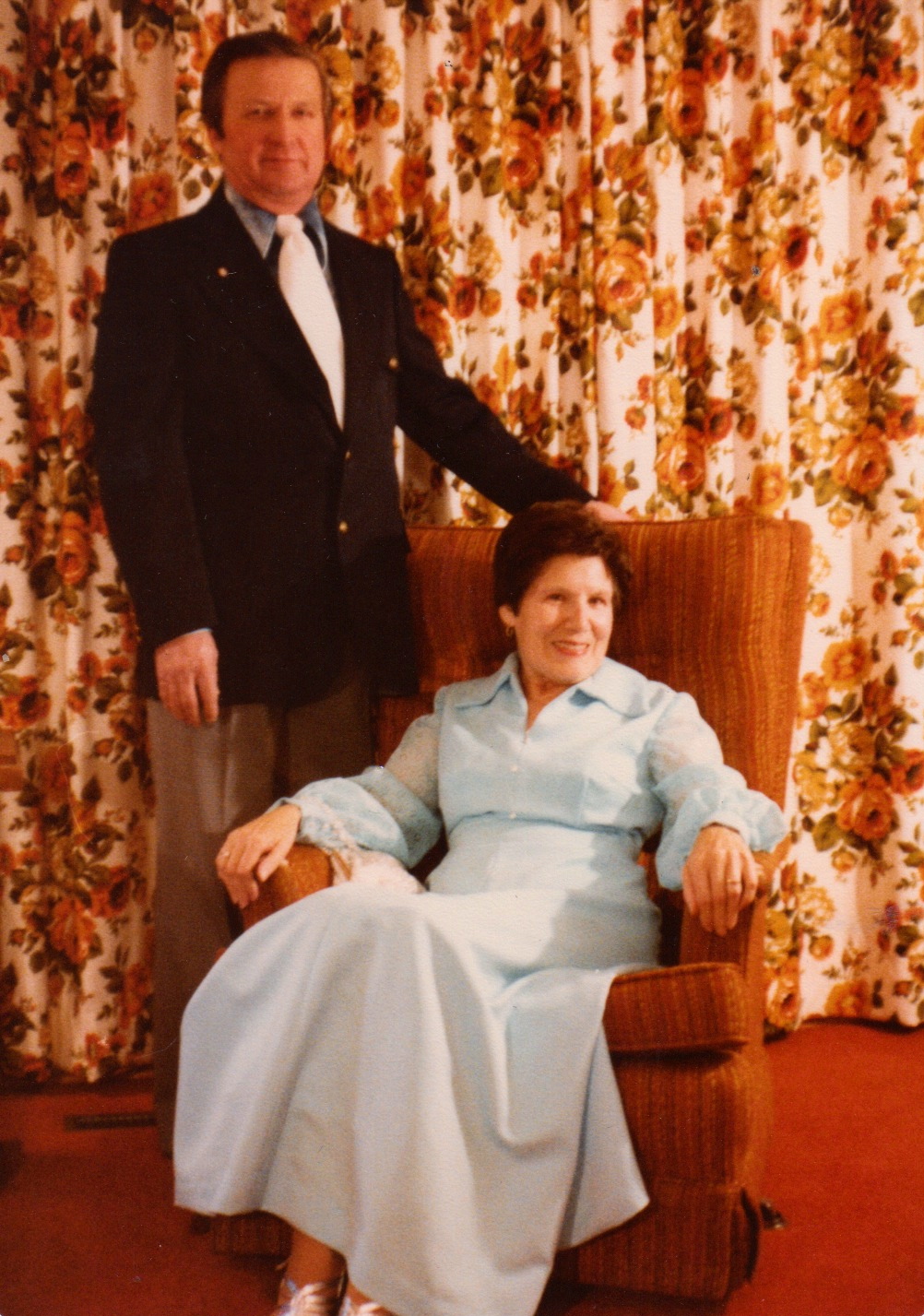
The Old Man and Ma in the powder blue gown I made for her.

Over the years Ma made me many dresses.  And I have made myself many as well, including my first wedding dress.  I even made one for her.  A soft powder blue floor length gown that she wore to some function with The Old Man.  She looked beautiful.  It was a labor of love.  Payback for the baby doll dress and all the other marvelous clothes she so tirelessly made for me.

People who sew tend not to throw away fabric. It’s all so precious and dear.  There are always scraps, bits and pieces left over from each project.  Ma saved all these little bits from her sewing history.  Then she gave them all to me.

Early in my first marriage, shortly after my oldest daughter was born, I began a project.  It was ambitious, and as I look back on it now, I was probably suffering from post-baby hormones. The ones that make you do cuckoo things.  What else could have made me embark on such an enormous undertaking?  It was in this frame of mind that the crazy quilt began.  It took about a year to hand embroider all the random pieces from a lifetime of sewing and stitching into a six foot by six foot masterpiece of psychedelic irregularity.  Asymmetrical.  Crooked.  Uneven.  The story of my life.

I used brightly colored cotton embroidery thread to hold all the individual pieces together.  The delicate stitches were all the ones Ma taught me.  Blanket, cross and chain.  The occasional french knot just for fun.

As the crazy quilt grew bigger and bigger, it was like I could see my entire life unfurl before me. The bright pink checkered dance costume.  The turquoise, teal and red baby wale corduroy jumper.  The long multi-colored hippy peasant gown.  The short lime green mini dress with the purple flowers.  The white eyelet skirt.  The embroidered dashiki top.  The wedding dress. Assorted kitchen table cloths and placemat sets.  They were all there.  And when it was all done, I carefully spread it out on the bed I shared with my husband.  It took my breath away.  My heart and mind drifted back to that little room at the top of the stairs where Ma sat with her beautiful elegant piano fingers.  Guiding the fabric along the steel plate of the blue Kenmore.  Her foot steady on the speed pedal.  The rhythm of the needle keeping pace.  By day’s end a baby doll dress for her much loved daughter.

Diaries of The Breadman’s Daughter: Brown Rice, First Love and You are all Sanpaku

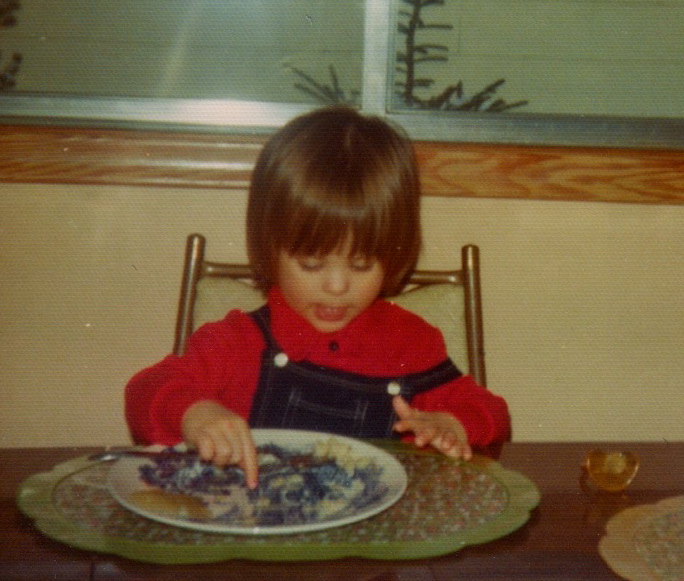
The firstborn enjoyed his solids.

I like brown rice.  But I didn’t always.  It wasn’t exactly an everyday staple in our family when I was growing up.  We mostly ate other starches like potatoes and spaghetti, before it was referred to as pasta.  My love affair with brown rice began just before I got my heart broken for the first time. They say the way to a man’s heart is through his stomach. That may well be true.  But quite often a woman’s heart is influenced by what a man puts in his stomach.  In the case of my first love, it was brown rice.  Although the relationship ended badly, it left me with two things.  A new way to eat.  And a new child.

Little back story.  Ma was a great cook.  Not a cordon bleu.  Nor a top chef.  Julia Childs.  Or Martha Stewart even.  But among her many gifts was the ability to create homespun, delicious meals for her family ever day.  While she may not have been a gourmet, there were times when she was called upon to be a magician, making much of little.  Shazam.

For the most part, we were meat and potato folks.  We also had our weekly meal regimen.  There were just certain things we ate on a regular basis that you could count on.  As surely as the sun rose in the east and set in the west, these meals were part of our family narrative.

The weekend began with fish and chips on Friday night, despite the fact that we weren’t Catholics.  For lunch on Saturdays we had hotdogs and fresh-brewed coffee, along with a visit from my mother’s cousin C, who I called Uncle C, because he was about a million years older than me.  Saturday nights were spaghetti nights, in homage to Ma’s Italian heritage.  Ma would get up early Saturday morning to prepare her tomato sauce and famous spicy meatballs.  She would place the pot of Italian goodness on the back burner of the stove to simmer all day, filling the house with a mouthwatering aroma that taunted us.  As a result, there were many “taste testers” in our family.  Wooden spoon dippers and sneaky samplers.  Guilty parties, all of us.  After church on Sunday we had some sort of roasted meat (usually beef) with mashed potatoes, gravy, boiled vegetables and maybe a tossed iceberg lettuce salad.  Sunday nights, The Old Man would cook up a batch of sweet wafer-thin Finnish Pancakes, which we smothered in maple syrup and washed down with more fresh-brewed coffee.

Dinner meals from Monday to Thursday were a little more unpredictable.  For the most part they still involved some sort of meat and potato combo.  A little fried chicken.  Or a savory tuna casserole.  Occasionally, despite my very vocal protests, liver and onions.  I have only one word to adequately describe this culinary offensive offering.  Yuck.  Often on the Thursday before The Old Man got paid, we had wieners and beans.  And usually sometime during the week, Ma fried up hamburger patties, which she served with mashed potatoes and green beans.  I used to pick out the onions in the patties and dip each mouthful in Heinz ketchup, then wash it down with a large gulp of milk.  The Old Man and I enjoyed a glass of milk with every meal.  Plus, there was always the whitest of white bread and butter in the centre of the table.  Each meal ended with dessert.  Usually something freshly baked by Ma.  Pie, cake, cookies, pudding.  If there were no baked goods, then we had ice cream.  Vanilla.  Sometimes topped with canned fruit cocktail and its coveted token maraschino cherry.

On special occasions and holidays like Christmas and Easter, we had grander versions of the Sunday roasted meat and potatoes.  By this I mean, turkey or ham.  Holiday dinners, however, involved more boiled vegetables, baked turnips, cranberry or apple sauce (depending on the meat), stuffing, cabbage rolls, and either dill pickles (with turkey) and mustard or sweet pickles (with ham.)  The exclamation mark that followed these meals was the assortment of desserts and sweet treats.

These were the meals of my childhood and youth.  But after I had my first big love, followed by my first big heartbreak, some things changed. My primo amore introduced me to a book called You are all Sanpaku.  I don’t remember all the intimate details from this book, but I do recall spending hours gazing into the mirror trying to determine whether or not I had Sanpaku eyes.  Were the whites of my eyes perilously showing in three places – side, bottom, side?  It was terrifying.  I was convinced that I was going to die suddenly from some heinous mystery illness if my irises didn’t centre themselves properly in my eyes.  Fortunately, there was a cure for this Japanese medical malady. The Macrobiotic Diet, as prescribed in You are all Sanpaku.  It involved consuming copious amounts of whole grains and preferably raw vegetables.  And if not raw, lightly steamed in a stainless steel steam basket.  Nothing processed.  Nothing.  Not even a hotdog.

The whole grain of choice for my love and I was brown rice.  Not white.  Not parboiled. Not Minute.  Nor anything produced by Uncle Ben.  Brown with long grains and unmilled.  Chewy.  Nutty.  Whole.  Had I not been so in love and consumed by fear, I would have considered this to have been food only suitable for our Budgie.  Had my pheromones not marred my taste buds and clouded my judgement, I would have acknowledged forthrightly that brown rice did not taste good.  Compared to the fluffy white stuff that came with our sweet and sour chicken balls, it was unappetizing. Downright disgusting.

But I was in love for the first time.  And I would eat anything for love.  Mushrooms even.  And broccoli.  Wild fiddleheads.  And because I liked to share things with Ma, I introduced her to the wonders of the Macrobiotic Diet too.  Typical of Ma, she embraced this new fandangled idea of mine with open arms and an open mind.  Slowly, bit by bit, together we introduced aspects of this new way of eating into our lives.  First the brown rice. Then the stainless steel steamer.  She bought a blender.  A pasta maker.  She added whole wheat flour and a variety of new interesting fresh vegetables, including broccoli, to her grocery list.  A health food store opened on the other side of town.  She began to explore the wonders of its wares.  Suddenly weird things began to pop up in our cupboards and refrigerator.  Yogurt. Wheat germ. Lecithin granules. B-complex vitamins.  Ma not only embraced this new approach to eating and health, she ran with it.  Like a health food flag bearer leading the charge.  Hail to Ma Earth.

Over the years there have been many books that have transformed my life. 

The firstborn playing with his food.

was one of the first.  It may not have saved my life but it certainly changed its course.  At least the part that involved my physical wellbeing. As for my spiritual path, and matters involving the heart, there have been many books that have had their influence.  I’m still a work in progress so I’m certain there will be many more.

But we always remember our firsts.

Like the young man who gave me the book, and the lifelong dietary path.  Yes, he broke my heart and it took years to fully recover from that.  But he also gave me one of my greatest treasures in life.  My firstborn.  And that blender Ma bought?  We used it to make all of his baby food.  Fresh.  Lightly steamed.  And blended with love.

Diaries of the Breadman’s Daughter: There’s Nothing Like the Smell of Coffee in the Morning.

Ma and boo in PJs enjoying a morning moment.

I’m a morning person. I get up early while my family remains nestled all snug in their warm comfy beds. This does not mean they are sleepyheads.  Or lazybones.  It’s just that I’m a particularly early riser.  For it is only at this time that the house is quiet and still.  Like the Herman’s Hermits song proclaims, “there’s a kind of hush.”  Just the way I like it.

When I’m in full-blown writing mode I get up, I make a cup of hot tea and head for my room.  But it wasn’t always so.  The room was there but I wasn’t.  I was in another room with a bed and a warm body next to mine.  That was, and is, nice.  But for a writer, and a creative spirit, it’s not enough.  I made excuses for why I wasn’t in my very special room doing creative things.  You know the kind. Family commitments.  Full time job.  Busy life full of distractions and diversions.  Pets to walk. Cakes to bake.  But excuses aside, the truth was it made me sad.  Glum.  Blah.  Whiny even.  Then I had this eureka moment about 15 years ago. The switch was flipped and the light went on. I had this notion that if I got up an hour or two earlier I could go into my room and do stuff.  At the time, I wasn’t sure what that would be exactly.  But as it turns out I had a novel to write.  Some poems. A ton more letters to God.  And a few song lyrics. Then some music to go with those.  I learned that much can be accomplished in the wee hours before 6:00am.

The truth is, it wasn’t all that difficult for me to get up that early in the morning.  Pre-dawn rising is part of my family heritage.  If geneticists were to look inside our DNA, I’m certain they would find some little atypical first-light wrinkle in one of our chromosomes.

Little back story.  Because the Old Man was a Breadman, his workday began early.  Crack of dawn.  He had to get to the bakery, load his truck and be on the road delivering the bread and other baked goodies by 7:00am.  This was back in the day, when it was essential to deliver the ultimate in freshness door to door.  Warm and ready.

Ma always got up with The Old Man.  While he was getting ready for work, she was busy in the kitchen.  A fresh pot of coffee was perking in the dinted aluminum Percolator with the black handle and glass knob on top.  Once the water-coffee mixture began to bubble up into the knob, Ma would turn down the heat and let it settle and simmer on low.  While the coffee was brewing, the well-oiled cast iron frying pan was in full-on action.  Four strips of bacon fried to a medium crisp.  Two eggs.  Sunny side up with a fringe of brown crunch.  Two slices of white Wholesome bread toasted to golden perfection, then buttered.  The table was set for one.  Next to The Old Man’s plate was a jar of Kraft strawberry jam or orange marmalade, a bottle of homogenized milk, a bowl of white sugar, and glass shakers of salt and pepper.  These were the scrumptious aromas of morning for the thirty-plus years that The Old Man worked for the bakery.  This was the first heavenly scent of dawn and waking up.

Sometimes I would get up before The Old Man left for work and join him at the table.  But mostly I got up afterwards and had breakfast alone with Ma.  I loved my morning time with her.  I was never really that hungry in the morning but I ate anyway.  Mostly to appease Ma, so she wouldn’t worry or fret that I was malnourished or starving to death.  Ever since I was a youngster I drank coffee.  The Old Man was a Finlander so coffee was a huge part of his personal culture.  Next to Vodka, coffee was the Finn’s beverage of choice.  The coffee of my wonder years was nothing like it is today.  We’re not talking Starbucks super strength here.  Back then, coffee was akin to dish water.  And we were blissfully ignorant of any harm it may have caused a child.  I enjoyed my daily morning coffee until I hit my early twenties when I quit cold turkey.  As it turned out, it wasn’t so good for my sensitive nervous system, causing my body to shake rattle and roll after one or two sips. Tea, in particular herbal or decaf, then became my beverage of choice for decades.  It’s only been recently that I have started to enjoy one cup of coffee in the morning.  All things wonderful.  Ma and I were also Tea Grannies and loved our Orange Pekoe and Earl Grey.  Especially with fresh-baked cookies.  Simply divine.

For the most part, Ma and I had toast and jam for breakfast. We kept it sweet and simple.  White bread.  Lots of butter slathered on first, then a big dollop of jam.  Sometimes we’d add peanut butter.  Sometimes we didn’t add anything.  Just butter.  It all depended on whether we were in a sweet or savory mood.  My morning coffee was really more milk and sugar than it was coffee.  And it was delicious.  Sweet.  And creamy.  I drank it down quickly in big gulps.  Sometimes I slurped it from my spoon like soup.  But mostly I poured it back. “Ahhhhh.  That was sooooo good Ma,” I’d exclaim.

I enjoyed this quiet breakfast time with Ma.  We drew together, both in our flannel nighties, and talked about things.  The kinds of conversations mothers have with their little girls.  Precious.  Intimate.  Confidential.  I shared all my secrets with her.  I knew she was the one person in the entire world that I could trust completely with my tender young heart. I told her funny stories.  She laughed.  I relayed the nightmare that woke me up in the middle of the night.  She comforted.  I confessed my unrequited love.  She consoled.  I cried over my broken heart.  She caressed.  I confided my dreams for the future.  She encouraged.   I hurt her feelings.  She forgave.

On special occasions or holidays, when the family gathers, I still like to get up early, even though I don’t write during vacation time.  Our entire family comes together at Christmas and I’m usually the first one up.  I like to putter around in the kitchen and put the coffee on.  And that’s when it happens.  The fresh brewed aroma takes me back.  To a little kitchen table with its cheerful homespun tablecloth.  It’s set for two.  It’s cold and dark and wintry outside.  But it’s warm and bright and safe inside.  Ma pours me a cup.  Life is good.

Diaries of the Breadman’s Daughter: Dog Poop and the Fine Art of Raking.

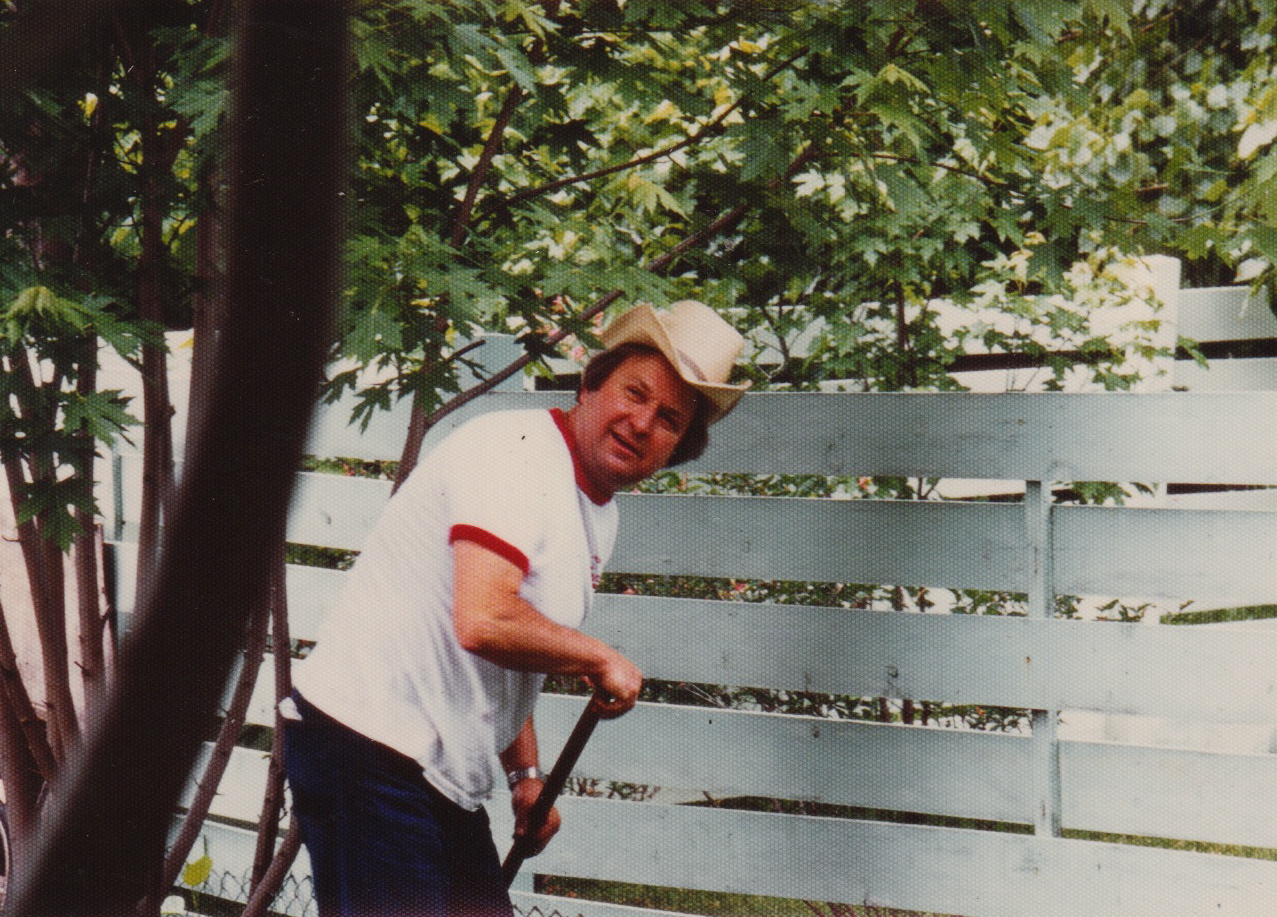
The Old Man with his rake and white cowboy hat.

I like my garden.  And I like to hang out in it.  I like all the flowers and trees. The blueberry bushes, mauve lilacs and sundry shrubs with no names.  The bird houses clinging to the Garry Oak trees are cute and folksy.  But most importantly, they attract delightful birds into our little piece of the world and that fills me with glee.  It’s spring and I’m itching to get out there and watch my husband do all the grunt work.  I admire his talent for breathing new life into the places where unpleasant dead vegetation has amassed over the winter months.  He seems to enjoy doing that.  I see no reason to discourage him.  I prefer to putter.  Plant pretty things.  Pansies.  Petunias.  Poppies.  And flowers that start with other letters too.  Like Geraniums and Marigolds.

There was a time when I was a great gardener.  Or at least I worked hard at it.  Did all the grunt work like my husband does now. When I was living in Toronto with my two older kids, my summer weekends were spent mowing lawns, trimming hedges, dead-heading flowers, staking tomato plants, plucking peppers, weeding and watering.  I got my hands dirty and my knees bruised.  It was back-busting, nail-breaking work.  It involved blood, sweat and tears.  But it was also glorious.  And gratifying. Especially at the end of the day, when I sat in the tranquil shade of our grapevine canopy and admired my day’s travail.

We lived in a predominantly Italian neighborhood with a smattering of Greek, Portuguese and Jamaican folks.  I rarely knew what anyone was talking about because I didn’t speak any of those languages.  Ma was a second generation Italian and only knew how to count to ten, so consequently that was the extent of my Italian conversational skills. Not very engaging.  We were the foreigners in Toronto’s Little Italy.  The Mangacakes.  But nonetheless, we felt at home there. Possibly because in their warm olive-complected faces, I saw Ma.  But despite the language differences we were able to communicate, especially in the back gardens where our Italian neighbors and I spent much of our spare time during those steaming summer months.  And I definitely understood good advice on growing tomatoes and peppers – the vegetables that grew in abundance and seemingly effortlessly in that climate.  With their advice, even I grew them with ease.

I look back and marvel at the gardening language we employed.  It consisted of hand gesturing, facial expression, demonstration and example. There weren’t a lot of words because there were so few we had in common.  Yet we learned this universal language that crossed all cultures and parlance.  It was as beautiful as the luscious red tomatoes and delectable green peppers we grew.  Communication at it’s simplest.  You point.  You dig.  You hoe.  You stake.  You pluck, pinch and prune. You scratch your head.  You smile.  You laugh.  You say thank you.

Little back story.  I come by my love of gardening honestly.  The Old Man taught me all the basics.  Back then we didn’t call it “gardening” though.  Far too gentile and refined sounding for that time and place.  It was yard work.  Raking grass or leaves in the front yard.  Digging up earth, planting rows of seeds, watering, weeding and harvesting in the backyard.

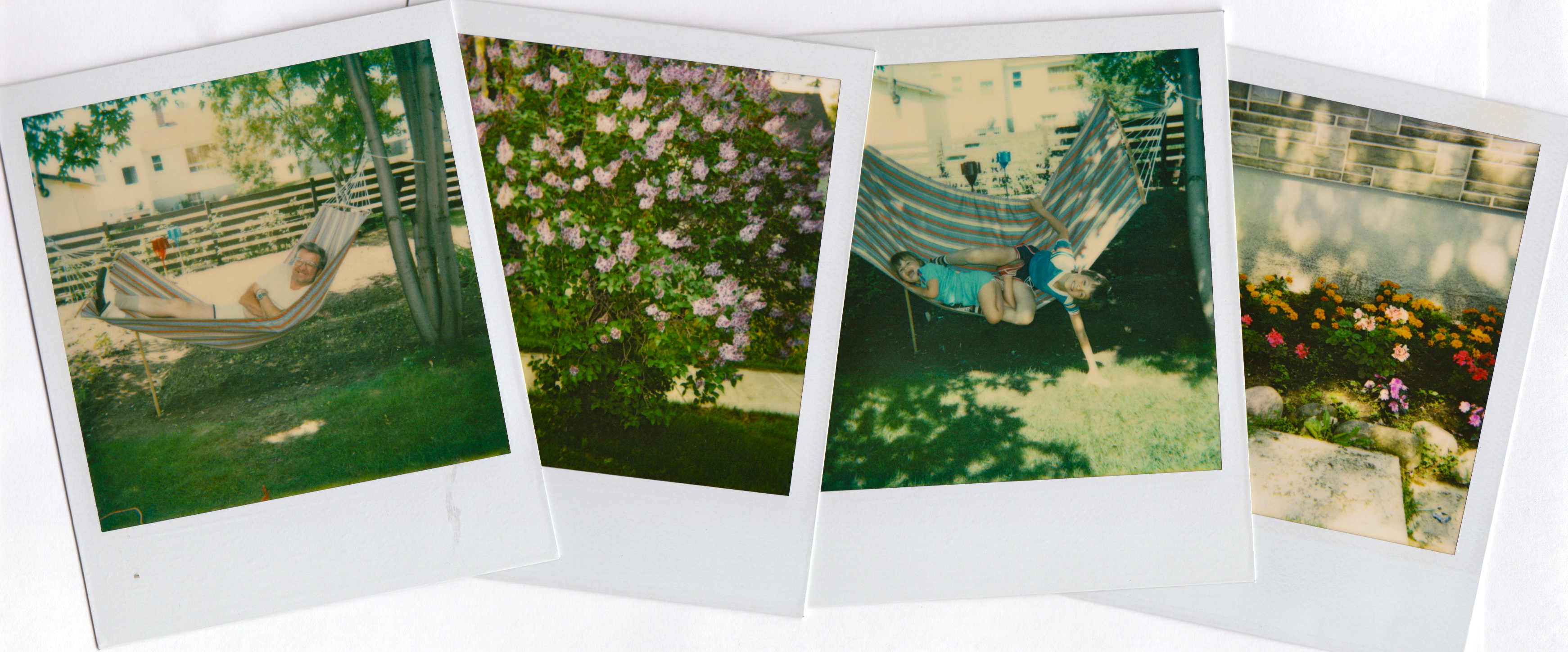
Over the years, The Old Man tinkered with the backyard, adding a row of Poplar trees along the fence line and a Weeping Willow, that eventually became a nuisance despite it’s beautiful forlorn hangdog branches. It’s labyrinth root system overtook the yard and sucked the life out of everything.  There were a couple of evergreens here and there.  But the piece de resistance, the shining glory of the backyard were the Manitoba Maples.  Two beauties strategically planted about ten feet apart.  Just wide enough to hang a red white and blue striped hammock.   The swinging bed of afternoon daydreams and early evening siestas.  The double swing for giggling grandkids.  The humorous pratfall for anyone who dared to keep their guard down.  The place to rest your weary soul after a hard day’s work.

In the front yard there were flowers under the front windows.  Marigolds and Geraniums mostly.  These were the Old Man’s favorites. I suspect because they were both hardy and happy plants.  Bright and cheerful all summer long and well into an Indian Summer. Feisty enough to make it to Thanksgiving (Canadian) and some years tenacious enough to hold out until Halloween.  There was a wild rose growing between our yard and our neighbors.  The scent of which I will yearn for until the day I die.  But the centerpiece of the front yard was a beautiful lilac bush that bloomed in June.  Ma would pick a bouquet for the kitchen table, the sweet romantic fragrance enveloping the entire room.  On the boulevard grew another magnificent Manitoba Maple.  Every house along Kenogami Avenue had one.  They were a gift from the city to a weary wartime street.  Green lush shadow casters in summer.  A riot of autumn colors in September and October.  Naked, flexible and courageous all winter long.

I’ve heard it said that it is our sense of smell that has the power to conjure up past memories and emotions.  That appears to be true for me.  The first hint of Spring in the air and I’m ten years old in the front yard with The Old Man.  We’re raking.  (It’s probably more accurate to say, he rakes and I watch and pick up things with mine.  Just the same, I learned the fine art of collecting and disposing of winter debris.  A lesson that would serve me well years later in my old Toronto neighborhood.)  All the snow has finally melted.  The grass is still soggy and mushy in spots.  At first blush it looks dead and gone forever.  Hopeless.  The smell is a paradoxical brew of pure clear 100% Northwestern Ontario Spring air and fusty rancid months-old dog poop.  Then after all the raking and observing is done, something supernatural occurs.  God lifts the winter carpet to reveal the wondrous new green sprouts concealed beneath. And The Old Man and I stand there leaning on our rakes surveying the scene, and we’re hopeful. Optimistic. Expectant.  Summer is coming.  Soon the lilacs will bloom.

Eleven years ago, on St. Patrick’s Day, The Old Man, my father, the Breadman had dinner as usual at the old folks home, where he had spent his last year.  Afterwards, he went for an early evening siesta.  He closed his eyes and then held hands with Ma.  He left quietly without any fanfare.  No trumpet calls.  No slapping spoons.  No good-byes or family gathered by his bedside.  When I got the news, my first  thought was “just like The Old Man to leave town on St. Patrick’s Day.”  And my second thought was “I love you and say hi to Ma. I’ll miss you both forever.”